Who Was Robert Burns?
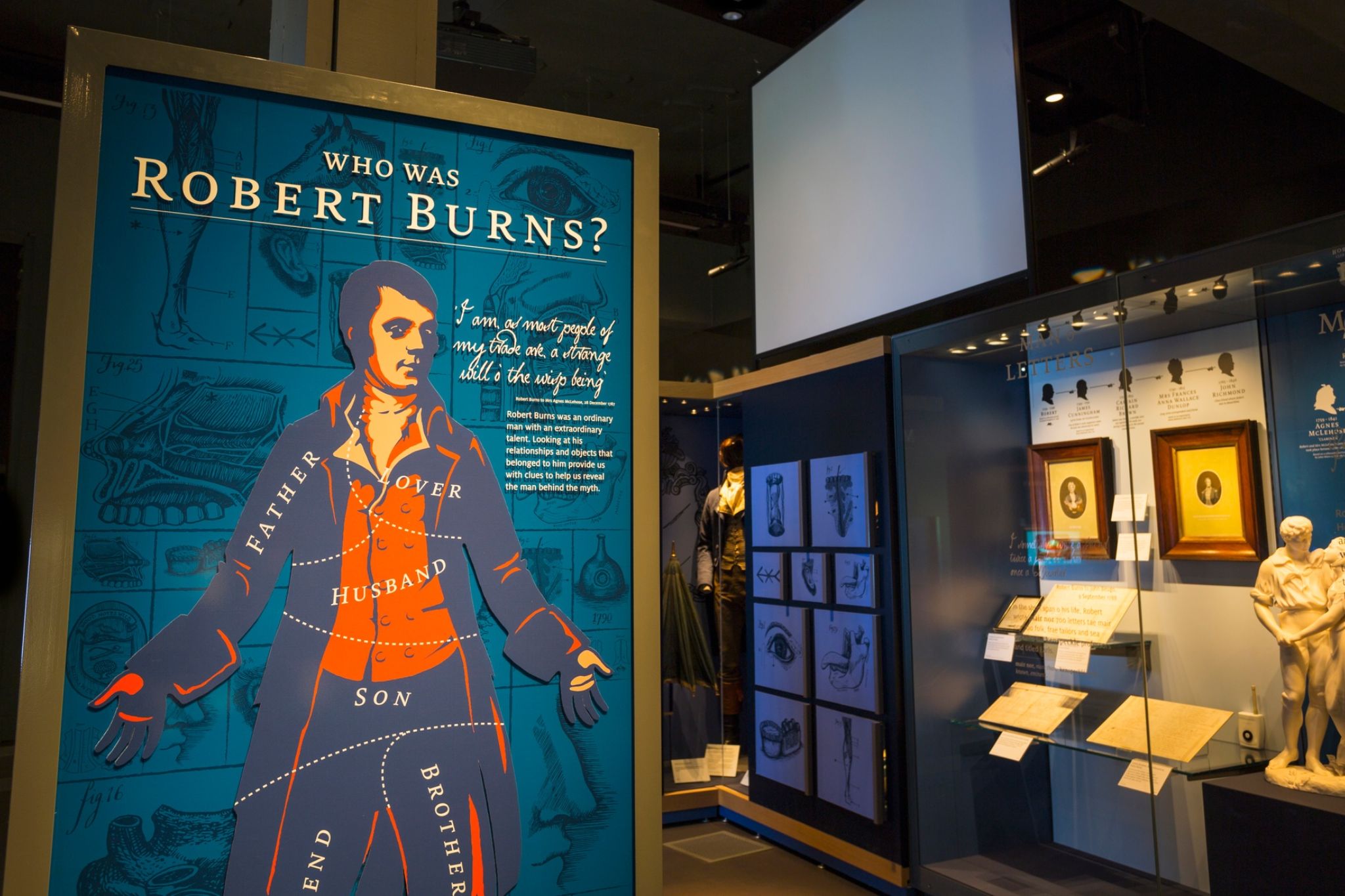
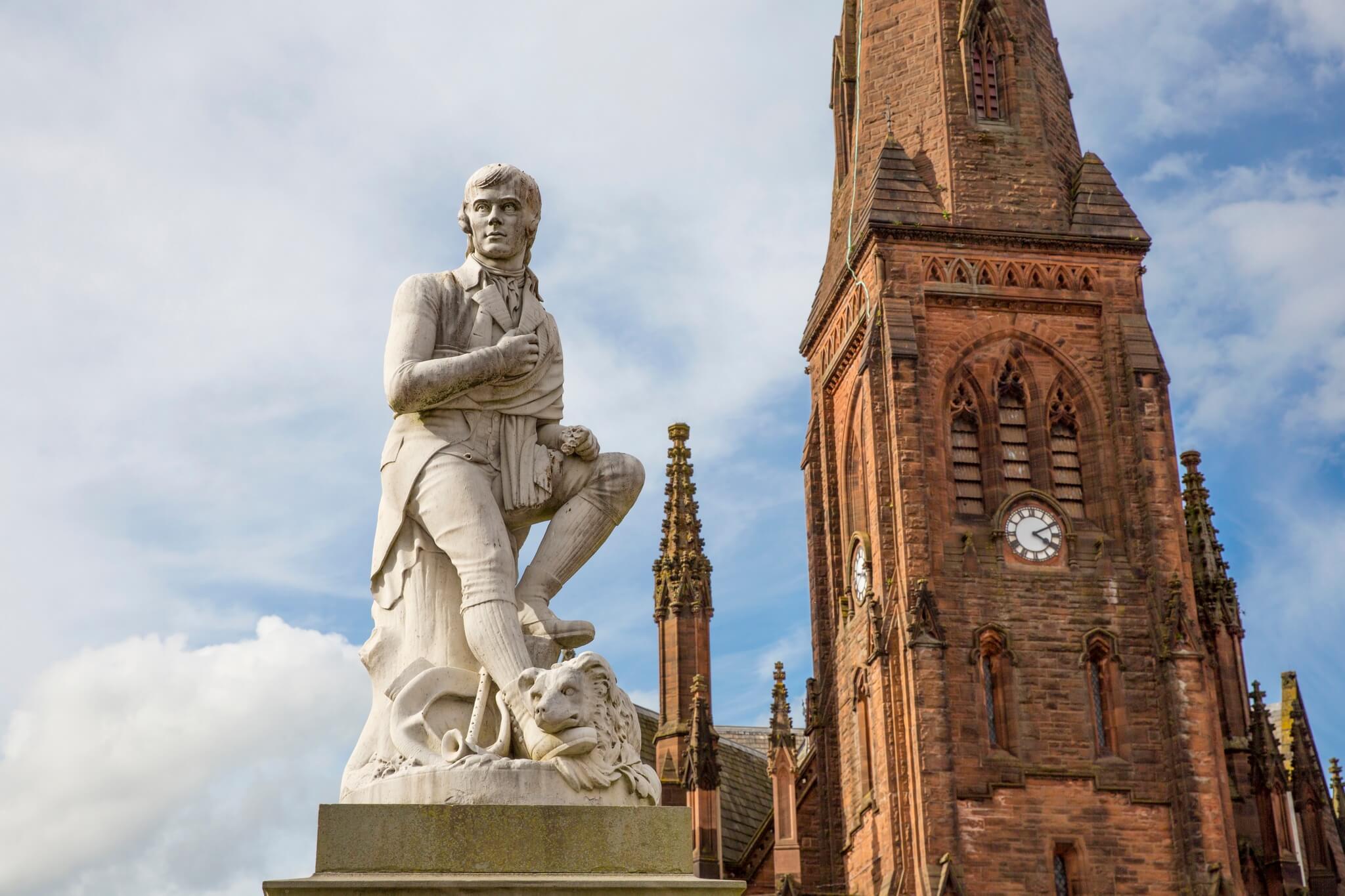
Robert Burns, or Rabbie as he is sometimes known, is a significant iconic figure in Scottish Culture and History and is also know as one of the worlds most famous poets.
Born into a poor family on 25th January, 1759, in Alloway, Ayr, Burns started his career by working on the family farm. Robert's father recognised the importance of education and together with other friends, a local teacher was hired to educate Burns. Even from an early age Burns began to show signs of his writing talent.
Moving into adulthood Burns was known for his great passion for Scotland and his dynamic and contemporary vision became an important source of inspiration to the founders of both socialism and liberalism.
He later rose to fame, in 1786 when his first works "Poems, Chiefly in the Scottish Dialect" were published by John Wilson of Kilmarnock, and so began his flourishing career in writing.
Much of the influence for Burns' songs and poetry were gathered from his surroundings, the places he travelled to, the culture and politics of the day and of course the people he loved.
Now, more than 200 years after his death, Robert Burns is still one of the most celebrated men in Scottish culture and social history throughout the world.
Find details on some of the key milestones in Burns's short yet eventful life below.
Please note this is only a summary of events in the life of Robert Burns.
1759Robert Burns Birth

1765James Murdoch becomes tutor to Robert

1784Burns moves to Mauchline

1785Burns marries Jean Armour

1786Burns first work published

1787The Edinburgh Edition of his poems is printed

1788Burns moves to Ellisland Farm

1791Burns moves to Dumfries

1796The death of Robert Burns

25 January 1759
Robert was born the eldest of seven children to parents William Burnes and Agnes Broun's, on the family farm in Alloway, Ayr on the West Coast of Scotland.
The cottage where Burns was born, known as 'Burns Cottage' still stands to this day. Now fully restored to its original state, Burns Cottage, has now been transformed into an authentic visitor attraction. Part of Burns National Heritage Park, Burns Cottage includes an audio-visual interpretation bringing to life the childhood world of Robert burns and is a must see attraction for all Burns enthusiasts.
For more information on the Burns Cottage, including opening times and admission fees click here.
23 January 1765
By now William (Burns' father) had moved the family to Mount Oliphant, He worked hard on the farm, yet the family were still poor and times were hard. However, William realised the benefit of a good education and persuaded other local people to raise a subscription to pay for a schoolteacher, John Murdoch, to stay in Alloway and teach the local children.
At an early age, Robert showed signs of his famous talent and Murdoch later recounted how well he took to his books and how quickly he could memorise whole passages of text.
Before being taught by Murdoch, William produced a 'Manual of Religious Belief' to help with Robert and his brother Gilberts Education, this manual can now be found at the Burns National Heritage Park click here. to find out more
18 January 1784
Burns Moves to Mauchline - 1784
In 1784 Robert's father, William Burnes died, and it was then that Robert moved his family to Mossgiel Farm, outside Mauchline, and changed the spelling of the family name to Burns.
It is here, in Mauchline, that Robert met Jean Armour the woman who was later to become his wife. (Jean is often referred to now as one of the Mauchline Belles).
23 January 1785
In this year Burns met Jean Armour and a short while after their acquaintance, Jean became pregnant, with what was to be the first of his many children *. On discovering his impending fatherhood, Burns married Jean, although the marriage lines were later destroyed by Jean's father, James Armour, who was incensed by her relationship with Burns.
It was in 1785 that Burns completed many of the poems which were later contained within his first published book "Poems, Chiefly in the Scottish Dialect"
*Burns fathered a total of 12 children, not all of them to Jean Armour
20 January 1786
A significant year in Burns' short life, he became a father, his first work was published and he moved to Edinburgh.
'Poems, Chiefly in the Scottish Dialect' (later known as The Kilmarnock Edition) was published on July 31st in Kilmarnock by John Wilson. It cost 3 shillings to buy and the entire print-run of 612 copies had sold out within one month.
Later that year in October, Burns became the father of twins, Jean & Robert and sadly Jean died shortly after her birth. Jeans father did not approve of her relationship with Burns and he destroyed the marriage lines as a show of disaproval and sent Jean to live with her uncle and aunt in Paisley (Glasgow).
Burns himself believed that by destroying the marriage lines, his marriage to Jean was over. Feeling deserted by Jean, unaware of the real reason she had moved, Burns decided to move from Mauchline to Edinburgh.
On the 27th November Robert set off for Edinburgh, for what was to become one of his many travels across Scotland.
23 January 1787
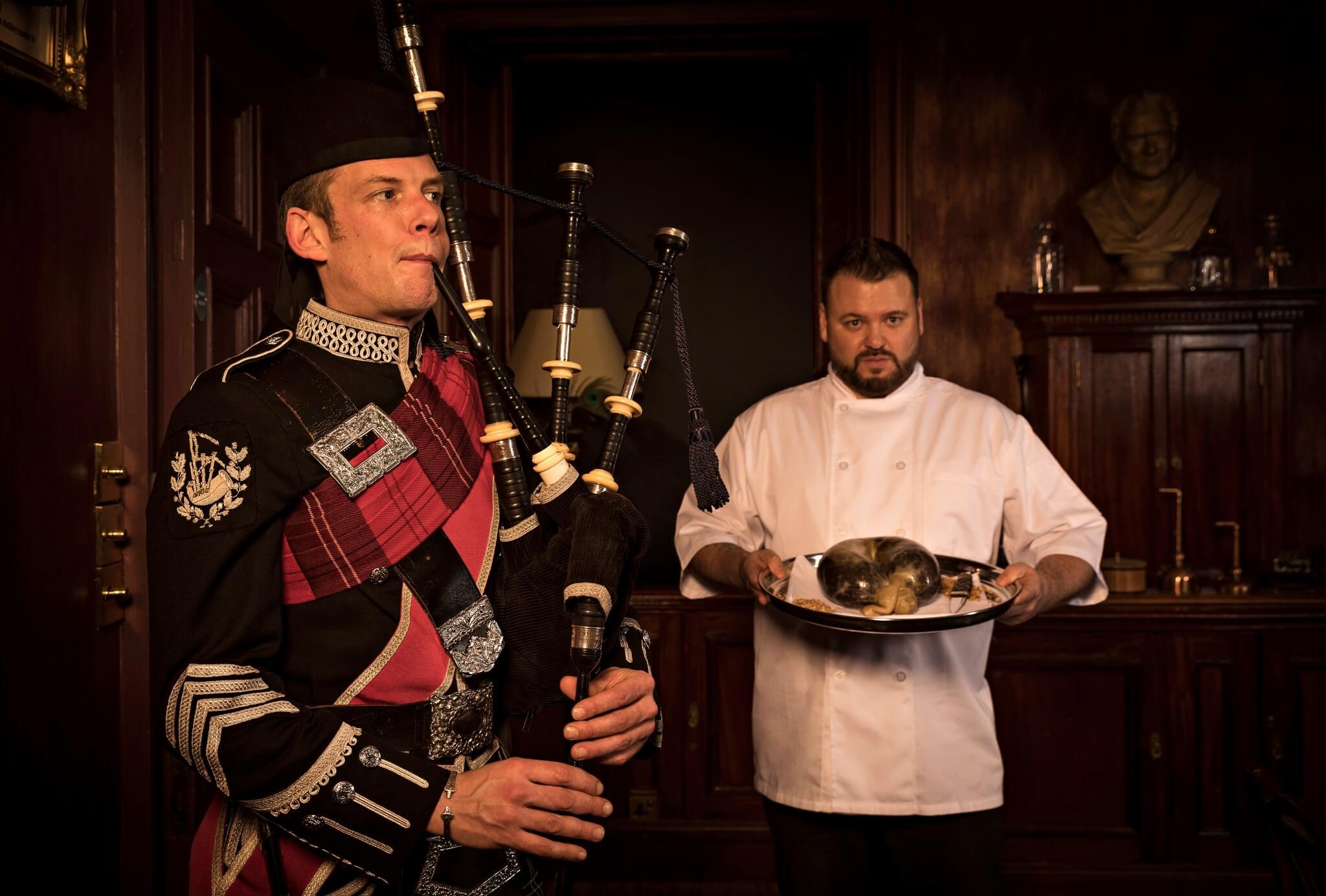
The Edinburgh Edition of 'Poems, Chiefly in the Scottish Dialect' is printed by William Smellie including favourites such as 'To a Haggis'
In this same year The Dublin Edition is published by William Gilbert and the first London Edition is published by A Strahan, T Cadell and W Creech.
Also the first volume of the Scots Musical Museum is produced by James Johnson, with Robert Burns as the virtual editor and principal contributor. Published in Edinburgh by N Stewart 1787 to 1803.and included 'For a' that an' a' that, 'Ae Fond Kiss' and 'Auld Lang Syne'
Burns' own signed copy of his 1787 Poems, Chiefly in the Scottish Dialect, can be found at the University of Glasgow. For more places to visit which contain relevant burns memorabilia click here
Later in this year, Burns resumed his relationship with Jean Armour.
23 January 1788
Now back together, Burns and Jean Armour set up house in Castle Street, Mauchline, and later that same year move on to Elliesland Farm where Robert had taken lease. It was here at Elliesland farm that Burns wrote one of his most famous works 'Auld Lang Syne'
The first American Edition of 'Poems, Chiefly in the Scottish Dialect' is published in Philadelphia by Peter Stewart and George Hyde on this year and a New York edition follows, published by J & A MacLean, natives of Glasgow who moved to America in 1783.
23 January 1791
Burns gives up Ellisland Farm and moves his family to 11 Bank Street, Dumfries and later to a house in what is now Burns Street.
Dumfries was to become a key location for inspiration much of his most memorable work, where he lived as an active member of the community until his death five years later.
23 January 1796
In rapidly deteriorating health, Burns dies prematurely at the young age of only 37, on 21st July, in Dumfries.
For more details on the places and areas of Scotland Burns travelled to throughout his life click here